
A strategic playbook for pharma brand managers and healthcare marketing leads to decode the biggest brand-building shifts of 2026.
Executive Summary (TL;DR)
The Problem: Pharma companies have started spending more on the marketing front than ever before. But several still do not have a clear brand strategy. Channels get funded, 360 degree campaigns go out, reps hit the road. But if the coherent strategic foundation is missing, the brand will fail to build the kind of trust that is needed. This will be due to fragmented messaging, scattered spends.
The Strategy: The pharma brands which are actually gaining ground in 2026 are excelling in three things. One: reaching HCPs and patients with hyperpersonalised messaging that talks with them. Second: using digital platforms as a primary engagement layer. Third: building patient support that resolves real time access and adherence problems. The focus has shifted from just talking about things to actually accomplishing them. None of this is complicated in theory. In practice, most organizations are still figuring out how to do all three at once.
The Imperative: The pharma companies that treat digital, medical affairs, field, and patient services as separate functions with separate strategies will keep leaving value on the table. The ones that bring those functions around a shared view of the customer journey - and actually coordinate execution across them - are the ones building durable brand equity right now.
Pharma & Life Sciences Practice • Brand Strategy Intelligence
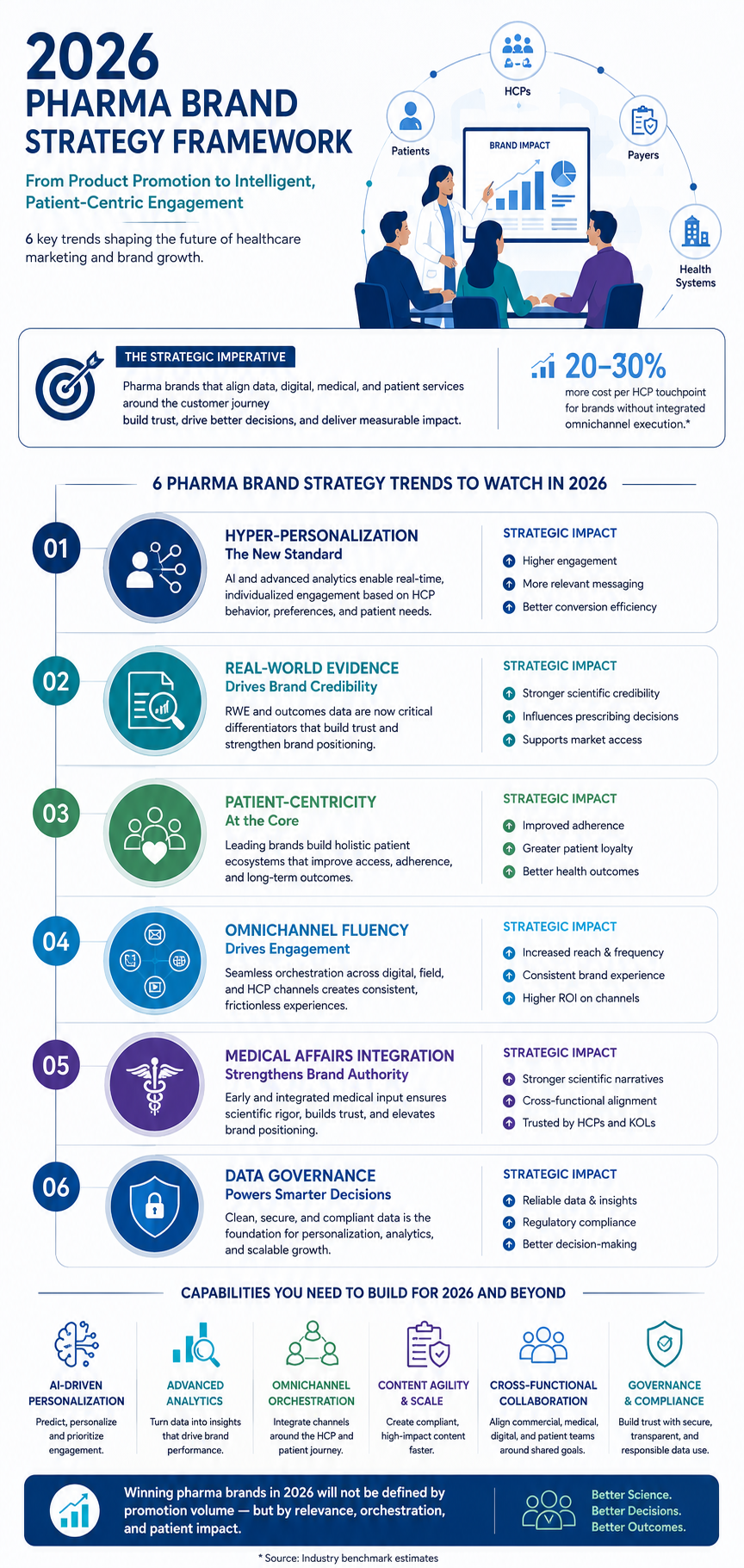
Fig 1. Authority anchored in scientific rigour now defines pharma brand credibility.
Not long ago, pharmaceutical marketing revolved around detailing reps, brochures, and journal ads. That world still exists, but a lot has changed especially due to the advent of AI and hyperpersonalization. Now, everything is about digital, data, and patient-first thinking. If you are someone who is responsible for building or managing a pharma brand in 2026, the pressure is real. Regulatory scrutiny is tighter. Generic competition moves faster. Patients arrive at the clinic having already researched their condition on three platforms. And physicians? Well they are spending less time with reps and more time inside EHR systems and clinical decision tools.
So what does a strong pharma brand strategy actually look like this year? This post breaks it all down- the pharma brand strategy trends worth tracking down, the tactics worth investing in, and the mindset shift that will separate your brand from others.
Let’s be direct: it’s high time to say goodbye to the old playbook.
“Push more messages, reach more prescribers” used to work when you had a captive audience. Today, every stakeholder in the healthcare ecosystem, from patients to caregivers to payers, and HCPs, each one is flooded with information. Standing out is no more about volume. Rather it is about relevance, timing, and trust.
A winning pharmaceutical marketing strategy in 2026 is one that gets most traction rather than interrupting for it. To achieve this you need to have a better understanding about where your audiences actually are, what questions they are asking, and what kind of information genuinely changes behavior. All in one, what exactly they are seeking and your entire strategy must revolve around that.
There is also the elephant in the room that you need to address: patent cliffs and biosimilar pressure. When your molecule is no longer differentiated on chemistry alone, the brand around it becomes the differentiator. Healthcare branding, when done well – creates loyalty that pure science cannot.
Pharma brands without coordinated omnichannel execution spend an estimated 20–30% more per HCP touchpoint - while seeing fewer behavior changes per dollar than brands running integrated cross-channel strategies."
Here are the top 6 pharma brand strategy trends that you must include while preparing your yearly brand strategy. Skipping on these may result in not achieving the targets that you actually set in the beginning.
Segmentation used to mean splitting your audience into a few buckets including specialists vs. generalists, high prescribers vs. low prescribers. That’s table stakes now.
The best pharma branding strategies for healthcare companies in 2026 operate at the level of the individual. AI-powered platforms can now analyze prescribing behavior, conference attendance, publication history, and digital engagement patterns to build rich HCP profiles. What does a specific cardiologist actually care about? What’s their preferred content format? Which clinical evidence gaps would move them most?
On the patient front, personalization matters even more because each patient has a different journey. Someone newly diagnosed with MS will be having a different set of questions and concerns compared to someone who has been living through that condition for years. Hyper-personalised messaging that understands these differences and talks with both segments builds connection. Generic messaging usually does not.
The practical implication: your CRM strategy needs to be more than a contact list. It should be a behavioral intelligence engine that feeds your content, your channel decisions, and your field team briefings.
Clinical trial data will always anchor a brand’s scientific story. But increasingly, pharmaceutical brand management teams are realising that real-world evidence (RWE) is what actually moves the needle in conversations with payers, integrated health systems, and evidence-hungry physicians.
The real world evidence tells a different story altogether than a trial. It talks about “what happens when patients consume the medication in the real world scenarios and not about “what results are achieved under controlled conditions.” That’s a powerful brand narrative.
Companies that invest in generating, packaging, and communicating real world evidence are building a durable competitive advantage over others who are sticking to other trials. It shows up in formulary positioning, in Pharmacy and Therapeutics committee conversations, and in the kind of credibility that no advertising campaign can manufacture.
For your pharmaceutical marketing strategy, real case scenarios shouldn’t live only in the books and record. Brand teams should focus more on understanding what data exists, how to get maximum benefit from that data, what is the gap that needs to be bridged, and how insights can be translated into physician-facing content and even patient education.
→ Match your post-approval evidence question to the right study architecture before committing budget. → Engage OneAlphaMed Medical Affairs
“Patient-centricity” has been a buzzword for so long that it has almost lost the actual meaning. But the pharma brands making it real – not just saying it – are the ones building durable equity.
Here’s what genuine patient-centric healthcare branding looks like in practice:
Co-designing support programs. In spite of building a patient support program and directly handing it to patients to deal with, leading pharma companies are involving patients and caregivers in the design process. The focus is more on – What barriers actually prevent adherence? What kind of support would genuinely help? The answers to such questions often surprise the internal team as the results are unexpected and far away from what the team actually thought through.
Reducing access friction. Copay support, prior authorization assistance, specialty pharmacy coordination, all these are brand experiences. Whenever a patient encounters friction in getting their medication, that is a brand touchpoint. Smooth those out and you have already built loyalty. Leave them rough and even an efficacious drug will underperform.
Building condition communities. Some brands have moved beyond transactional relationships with patients to becoming genuine connectors within a disease community. Sponsoring patient advocacy organizations, funding condition-specific resources, hosting events – these build trust that advertising can’t replicate.
Measuring what matters to patients. If your brand metrics are purely prescription-based, you’re missing half the story. PROs (patient-reported outcomes), adherence rates, time-to-therapy — these tell you how your brand is actually performing in lives, not just in scripts.
If you’ve been hearing “omnichannel” for several years now, you’re right – it’s not new. But there’s a difference between talking about omnichannel and actually executing it.
Most pharma organizations still operate in siloed channel teams. The digital team runs campaigns. The field force does its thing. Medical affairs publishes content. Patient services manages the hub. And rarely do these functions coordinate around a unified customer journey.
True omnichannel pharmaceutical brand management means the HCP who engages with your digital ad on Tuesday gets a relevant follow-up from a medical science liaison on Thursday. It means the patient who starts filling out a copay card application online gets a proactive call from a patient support specialist if they abandon the form. It means your content strategy is consistent, same key messages, same brand voice, same scientific accuracy, across every touchpoint.
This requires technology (a robust CRM, orchestration platforms, identity resolution) but more than that, it requires organizational alignment. Someone has to own the customer journey across functions. Without that ownership, omnichannel stays aspirational.
For too long, commercial and medical affairs operated as separate planets. Commercial drove the brand; medical managed relationships and published studies. There was a firewall – sometimes a healthy one, sometimes an overcautious one – that kept them distant.
That’s changing. And the change is good.
Medical affairs is increasingly recognized as a strategic function that can amplify pharma brand strategy without compromising scientific integrity. MSLs generate insights from KOL conversations that should feed brand planning. Medical education programs build the clinical foundation for brand messages. Publication strategies can be timed to commercial launches in ways that benefit both the science and the story.
The key is maintaining the integrity of medical affairs’ scientific independence while enabling smarter coordination. Commercial teams should not dictate what MSLs say – but they absolutely should understand what physicians are asking MSLs, and let those insights shape their strategy.
Here’s the unglamorous truth: you can have the best available AI tools, run the most creative campaigns, and the most patient-centric vision, but can still fail if your data is a mess. Data is the King. If you don’t have it right, everything will be off the place.
Pharmaceutical marketing trends in 2026 are generating enormous demand for first-party data, cookie deprecation as well as tightening privacy regulations. At the same time, pharma companies are discovering that the customer data is fragmented across outdated systems and inconsistently collected. And when it comes to maintaining the enormous amount of data, it just exists.
Data governance is a strategic problem that needs to be given utmost priority. It requires decisions about what data you are collecting, what is the intent and how it will be stored. Further it will involve the security part too taking care of who all will have access to it, and how it flows between systems to enable the personalization and omnichannel execution you’re trying to achieve.
Companies investing in clean, well-governed data infrastructure now are building a capability that will compound in value for years. Those who don’t will find themselves buying third-party data as a workaround – expensive, increasingly restricted, and a poor substitute for the real thing.
Pharmaceutical Marketing Trends 2026: The Capabilities You Need to Build
Let’s get concrete. If you have thought about where to invest your team’s time and effort along with the brand’s budget, here are the capabilities that will matter most in the next 2 years.
AI-powered content personalization. The ability to tailor messaging dynamically on the basis of HCP along with patient profile, journey, and prior engagement. It will not be limited to 10 versions of a piece – it may go to even thousands. You need to be ready with all permutations and combinations.
Sophisticated attribution modeling. Understanding which touchpoints will be actually influencing the overall prescribing behavior, not just which ones generated clicks. Multi-touch attribution, combined with sales data, gives you something you can actually optimize against.
Social listening infrastructure. Keeping a tap on what patients, caregivers, and HCPs are talking about across social platforms, forums, as well as communities. This isn’t just reputational surveillance – it’s a product insight engine and an early warning system.
Agile content production. The ability of creating, reviewing, and publishing compliant content quickly. Turn around time should be as minimum as possible. The pharma brands that can move at digital speed without escaping the regulatory corners have a meaningful competitive advantage.
The fundamentals of great pharma brand strategy haven’t actually changed: understand your audience deeply, differentiate on what matters to them, and show up consistently with value. What’s changed is the landscape you are operating in including the communication channels, the data, the competitive intensity, and most importantly the patient expectations.
The brands having large budgets or complex tech stacks aren’t the ones who are surpassing everyone. But the brands who are curious, giving high priority to patient care, honest about what is working for them and continuously working on improving the outcomes are winning.
The biggest pharma brand challenges in 2026 are increased competition, stricter regulations from the regulatory bodies, changing expectations from the patients and healthcare professionals, and pricing pressure. Above all is hyper-personalisation in the pharma industry. Everyone seeks for a solution, advice dedicated to them as per their conditions and requirements. The availability of generic medicines is changing the game for biosimilar medicines altogether. Considering all these factors the brands have to go all out to stand out while catering to the changing patient and industry requirements.
At the same time, pharma marketers need to balance out on personalized digital engagement with growing compliance scrutiny. Both of them need to be given equal priority if the brand wants to surpass the competition. Patients are more informed, HCPs are harder to engage through traditional channels, and even supply chain disruptions can quickly impact brand trust.
With AI in place, pharmaceutical branding is becoming more personalized, data-oriented and responsive. Instead of using the same messaging to every customer segment, pharma brands are sticking to tailored communication on the basis of healthcare professional’s behavior, patient needs, and engagement patterns.
It is also helping pharma companies in faster content creation, improved campaign targeting, and understanding patient conversations in real time case scenarios. With people relying on AI-powered platforms in search of healthcare information, pharma brands have shifted their focus to mark their presence in AI search results and LLMs. Digital presence is no more a choice for pharma companies, rather it's the need of the hour.
At its simplest, it's the answer to three questions: who are we talking to, what do we want them to believe, and how does every single touchpoint - from a journal ad to a patient support call - reinforce that? It matters because the days of differentiating purely on clinical data are getting harder. Biosimilars close the gap on molecules. Me-too products crowd the market. When science alone isn't enough to separate you, the brand is what does it. And brand equity in pharma is similar to all other enterprises, compounds over time when you build it consistently. But it will erode fast if it lacks consistency. Companies skipping on the strategy part and jumping to execution will end up resulting in a brand that never quite lands.
The first move is almost always the hardest one: being honest about what the product actually does better and for which patients that difference genuinely matters. A lot of brand plans skip that step and try to compete across every dimension, which usually means owning none of them. The brands that break through in crowded markets tend to pick a specific clinical narrative and own it, build disease education that creates the category before they pitch the brand, and invest in patient support infrastructure that makes getting and staying on therapy easier than the competition does. Sales force size still matters, but it matters less than it used to. What's winning formulary position and HCP mindshare today is trust and trust comes from being consistently useful, not consistently loud.
+91 9811660635
info@onealphamed.com
2414, Ground Floor, Aravali Vihar, Sector 49 Faridabad, Haryana – 121001 India
Copyright © 2026 OneAlphaMed. All Rights Reserved.