What building a pharma brand actually looks like in a world where the sales rep is no longer the primary channel.
Executive Summary (TL;DR)
The Problem: Most pharma companies have digital channels. Few have a digital brand strategy underneath them. The result is spend without direction- different messages reaching the same prescriber from different touchpoints, none of them connecting.
The Strategy: The brands gaining ground are doing three things. Personalising HCP outreach to the individual, not the segment. Engaging Digital Opinion Leaders alongside traditional KOLs. And running field, digital, and medical affairs from one shared narrative.
The Imperative: Digital is not a channel you add to your pharma brand strategy. It is the medium through which modern pharmaceutical brand management happens. Get the positioning right first. Then let the tools take it further.
Pharma & Life Sciences Practice • Brand Strategy Intelligence
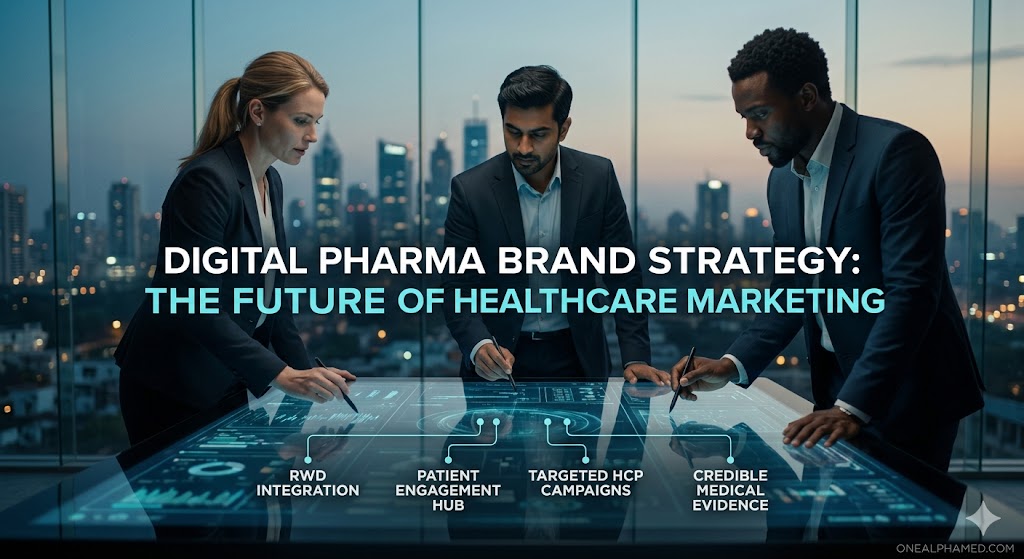
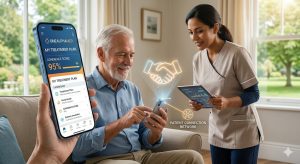
Fig 1. Digital pharma marketing has changed everything about how brands reach HCPs and patients.
There is a version of pharmaceutical brand management that most pharma companies built in the 1990s and kept running, with incremental updates, for thirty years. A sales rep shows up at a clinic with clinical data. A congress symposium establishes scientific credibility. A journal ad reaches HCPs. The brand gets built, slowly, through physical presence and paper.
That model is not dead. But it no longer runs on its own.
In 2026, the HCP who is most influential in a therapy area may have published only once in a peer-reviewed journal but their LinkedIn post last Tuesday was read by 12,000 clinicians. The patient who just received a diagnosis spent forty minutes researching treatment options before their follow-up appointment. The formulary committee evaluating your therapy pulled your brand’s real-world outcomes data before they read your clinical dossier.
Digital pharma marketing is not a channel you add to your existing strategy. It is the medium through which modern pharmaceutical brand management happens. The companies building durable brands in 2026 understand the difference.
It is not about running Facebook ads or being active on LinkedIn. Digital pharma marketing is what happens when you use data, digital tools, and the right channels to build genuine brand credibility with prescribers and patients in a way that is compliant, measurable, and stays true to your scientific story.
In practice, it comes down to four things working together.
The first is personalised HCP engagement and this is the foundation of any omnichannel pharma marketing model worth the name. A cardiologist in Chennai and a pulmonologist in Perth are not the same prescriber. They are at different points in the prescribing journey, they respond to different evidence, and they use different channels entirely. A pharmaceutical marketing strategy that sends them the same message on the same day is not engaging either of them, it is just reaching them. Digital tools make it possible to say the right thing to the right clinician at the right moment. That is what personalisation actually means in this context.
The second is digital opinion leadership. The KOL map has changed. Traditional Key Opinion Leaders still matter. But Digital Opinion Leaders in pharma – clinicians whose online discourse actively shapes how peers think about a therapy area – often reach more prescribers faster than a journal article. Identifying and engaging DOLs is now a core function of pharmaceutical brand management, not an add-on.
The third is always-on medical information. HCPs search for clinical information at 11pm on a Tuesday. If your brand’s medical information infrastructure only operates Monday to Friday, 9am to 5pm, you are absent at exactly the moments doctors are looking. AI-powered medical information systems – built on verified scientific sources, not general-purpose language models are becoming the operational standard for brands that want to be genuinely useful to clinicians.
The fourth is data that feeds strategy. Digital engagement generates real behavioural data inclusive of what prescribers clicked on, what they prefer to read, what they did not find insightful, where they dropped off. That data, fed back into Veeva or your CRM in real time, tells you which messages are landing and which are not. Pharmaceutical brand strategy that is not informed by this data is flying on assumptions.
“Digital pharma marketing is not a channel. It is the medium through which modern brand management happens.”
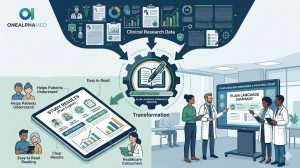
Pharma digital transformation stalls at exactly this point. The challenge is not a shortage of digital tools. Most pharma marketing teams have more platforms than they know what to do with – a CRM, a digital content management system, a congress events platform, a patient portal, and a medical information system that may or may not talk to any of the others.
The problem is integration. These tools are running in parallel rather than in connection. The field force operates separately from digital. Medical affairs generates scientific content that the commercial team is not using. The patient support programme is collecting real-world data that the market access team has never seen.
The pharmaceutical companies building the most effective digital brand strategies are the ones that solved the integration problem – not by deploying more technology, but by building one connected system where field, digital, medical, and patient teams are all working from the same data, the same evidence base, and the same brand narrative.
The fundamentals of how to build a pharma brand have not changed. You need clinical differentiation, a defensible scientific position, a compelling value proposition for prescribers and payers, and a patient experience that sustains adherence. What has changed is the execution layer.
Positioning still comes first. Digital tools are amplifiers – they make your message go further and faster. If the message is wrong, they make the wrong message go further faster. A pharmaceutical brand strategy that starts with channel selection rather than clinical positioning will fail in digital just as reliably as it would fail in print.
Once the position is clear, the digital execution has three components. Content that earns trust – not promotional assets dressed as educational content, but genuinely useful clinical information that makes the brand credible to a sceptical HCP. Channels are chosen around the prescriber, not around internal convenience – which platforms they use, at what stage of their clinical decision-making, and at what point in the day. And measurement that connects digital activity to commercial outcomes, not just to engagement metrics.
The digital pharma marketing strategy 2026 and digital pharma brand strategy 2026 landscape is clearer than it has ever been – the pharma marketing trends 2026 all point in the same direction. The brands gaining ground this year share a few characteristics. They have moved from segment-level targeting to prescriber-level personalisation – understanding individual HCP behaviour and delivering content sequenced to where that specific clinician sits in the prescribing journey. They have integrated their DOL engagement into the broader KOL strategy, so the peer-to-peer scientific conversation happening on digital platforms feeds into and is reinforced by the advisory board and congress programme. And they have built their real-world evidence generation into the digital infrastructure – using patient support programmes and connected digital tools to capture outcomes data as a natural output of the patient experience, rather than a separate research exercise.
None of this is complicated in principle. The complexity is in the execution – and in building the internal alignment between commercial, medical affairs, digital, and patient teams that makes it possible.
→ The brands winning in 2026 are not the ones with the most digital tools. They are the ones where those tools are all telling the same story.
Omnichannel is the goal most pharma companies are still trying to reach. The brands that get there first will find that the competition has already moved past it.
Here is where pharmaceutical marketing strategy is heading – and what it means for brands building for the long term.
Today, personalisation in digital pharma marketing means segmenting HCPs and delivering relevant content. That is table stakes by 2027. The next step is prediction – using behavioural and prescribing data to anticipate what a specific clinician needs before they search for it, and being present at exactly that moment. The brands investing in AI infrastructure now are building the capability to do this. The ones waiting are building a gap they will struggle to close.
Payers have been asking for real-world evidence for a decade. The shift happening now is that commercial teams are starting to treat it as a brand asset rather than a regulatory checkbox. RWE that shows how your therapy performs in actual clinical practice – not just in a trial population – is the evidence that differentiates branded products from generics at patent cliff, and from competitors at formulary. The pharmaceutical brand management teams building RWE generation into their digital patient support infrastructure from launch are the ones who will have that asset when they need it.
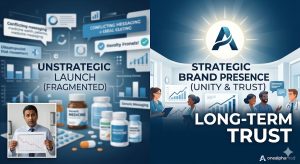
For the past decade, digital pharma marketing rewarded volume – more assets, more touchpoints, more channels. AI-generated content is about to make volume meaningless. Any brand can produce content at scale now. What cannot be replicated at scale is point of view – a brand that has a distinct scientific position, a clear clinical narrative, and the credibility to defend both. The future of pharma brand strategy belongs to brands that stand for something specific, not brands that say something everywhere.
The future of pharma brand strategy belongs to brands that stand for something specific – not brands that say something everywhere.
A: Think of it this way. Ten years ago, a pharma brand reached prescribers through reps, congresses, and journal ads. That still happens. But the cardiologist you are trying to reach now searches clinical evidence on PubMed at midnight, follows three oncologists on LinkedIn whose opinions she trusts, and has already formed a view on your therapy before your rep walks in. Digital pharma marketing is how you show up in all of those moments — usefully, compliantly, and with something worth saying.
A: Digital has changed pharmaceutical brand management in three fundamental ways. It has shifted the primary HCP engagement channel from physical field force visits to a hybrid of digital and in-person touchpoints. It has made prescriber behaviour visible in real time — what clinicians are reading, clicking, and engaging with — which allows brands to personalise and optimise their outreach. And it has elevated Digital Opinion Leaders alongside traditional KOLs, because online peer conversation now shapes prescribing faster than journal publications in many therapy areas.
A: Multichannel means being present on multiple channels - field force, digital, congress, email. Omnichannel means all those channels are connected - sharing the same data, delivering a consistent message, and being sequenced around the individual HCP's journey rather than around the brand's campaign calendar. Most pharma companies are multichannel. The ones winning market share in 2026 are omnichannel.
A: AI in pharmaceutical marketing strategy serves three practical functions. First, it enables prescriber-level personalisation at scale - predicting which HCP needs what content at what moment, and automating the delivery of that content across field and digital channels. Second, it powers medical information systems that answer HCP queries 24/7 from verified scientific sources, with audit trails and adverse event detection. Third, it processes the real-world data generated by patient support programmes and clinical interactions to continuously optimise campaign performance and brand positioning.
A: Traditional KOLs earn their influence through publications, clinical trial leadership, and conference presentations. That influence is deep and credible - but it is slow. A journal article takes months. A conference keynote reaches thousands. A Digital Opinion Leader can reach the same audience in a LinkedIn thread on a Tuesday afternoon, and the conversation it starts can run for days. DOLs are the clinicians whose online presence actively shapes how peers think about a therapy area in real time - and they are often not the same people as your traditional KOL list. In 2026, the most effective pharmaceutical brand management strategies work for both populations: KOLs for scientific credibility and peer endorsement, DOLs for real-time influence on prescribing conversations. You cannot identify your DOL landscape from a CRM database. You need social listening.
+91 9811660635
info@onealphamed.com
2414, Ground Floor, Aravali Vihar, Sector 49 Faridabad, Haryana – 121001 India
Copyright © 2026 OneAlphaMed. All Rights Reserved.