Understanding why Digital Opinion Leaders are disrupting traditional pharmaceutical influence models — and what Medical Affairs teams must do to stay relevant.
Executive Summary (TL;DR)
The Influence Gap: ~70% of high-influence healthcare professionals online are not recognized as traditional KOLs — creating a critical blind spot in legacy engagement models.
Speed vs. Credibility: KOLs provide scientific authority through peer review and academic channels. DOLs deliver real-time reach and peer-to-peer trust at digital scale.
The Integrated Imperative: The companies winning in pharma are not choosing between KOLs and DOLs — they deploy both within a unified, data-driven omnichannel strategy.
Pharma & Life Sciences Practice • Medical Affairs Intelligence

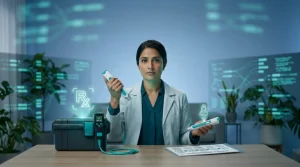
Fig 1. Digital platforms have permanently altered how healthcare professionals access, debate, and act on clinical information.
A Key Opinion Leader derives authority from institutional standing: prestigious academic affiliations, a history of clinical trial leadership, high-impact journal publications, and commanding presence at major medical congresses such as ASCO or ESMO. Their influence moves slowly and methodically through formal channels — advisory boards, symposia, and peer-reviewed literature — reaching a niche but highly credentialed audience. The traditional KOL operates within a largely unidirectional communication model, one that pharmaceutical companies have leveraged for regulatory validation and scientific endorsement for nearly seven decades.
A Digital Opinion Leader, by contrast, derives influence through digital fluency and networked peer engagement. DOLs translate complex clinical data into accessible visual abstracts, podcast discussions, LinkedIn analyses, and threaded social media posts that reach tens of thousands of healthcare professionals within hours of a congress presentation. The defining metric of a true DOL is not total follower count but peer-to-peer impact — how consistently other verified healthcare professionals engage with, share, and debate their content within a specific therapeutic area. Raw audience size is a vanity metric in this context; networked clinical authority is not.
"Approximately 70% of healthcare professionals who exhibit high online influence are not recognized as traditional KOLs — leaving pharmaceutical companies functionally disconnected from the majority of voices driving real-time clinical discourse."
Several converging forces have accelerated the ascent of DOLs across pharmaceutical strategy. The COVID-19 pandemic forced the industry to abandon in-person engagement almost overnight, and digital platforms filled that vacuum permanently. Over 70% of healthcare professionals now use digital channels weekly to access medical information and participate in professional peer communities. Despite the full return of face-to-face congresses and MSL visits, this behavioral shift has proven durable.
The demographic transition underway within medicine compounds this trend substantially. As the Baby Boomer generation of physicians approaches retirement — with close to 20% of oncologists currently nearing age 64 — Millennial and Generation Z clinicians are rapidly becoming the dominant prescribing force. These digital natives rely on social platforms for peer consultation, case analysis, and continuous medical education. For this incoming cohort, a printed journal article carries far less weight than a trusted peer’s real-time synthesis of new clinical data on LinkedIn or X.
Simultaneously, pharmaceutical field forces continue to face restricted access to physician offices. Changing clinical workflows, increased administrative burdens, and stringent institutional policies have made face-to-face rep interactions increasingly difficult to secure. DOLs fill this access gap by delivering peer-trusted scientific narratives directly to healthcare professionals in the digital spaces they already occupy — at scale, with measurability, and without requiring a scheduled appointment.
The strategic utility of DOLs extends across every phase of a pharmaceutical product’s lifecycle. During the pre-launch window, DOLs build disease awareness and clinical community readiness through unbranded educational content long before a product receives regulatory approval. They synthesize discussions around unmet needs, disseminate early-phase data, and educate specialized communities — particularly in rare disease areas where the HCP population is small but highly active online.
At launch, the most effective pharmaceutical strategies deploy KOLs and DOLs in parallel rather than in isolation. A KOL delivers rigorous scientific endorsement at a major medical congress; DOLs amplify that endorsement to a global audience of practicing clinicians within hours, translating dense Phase III data into accessible formats that time-constrained community physicians actually consume. The KOL provides scientific credibility; the DOL provides distribution velocity. Neither instrument alone achieves both.
Post-launch, DOLs serve a function that traditional KOL models cannot replicate: real-time misinformation defense. Clinical myths spread virally on social platforms before Medical Legal Review processes can formulate an official corporate response. DOLs with pre-established peer trust correct false narratives in the same digital spaces where they originate, protecting both patient safety and therapeutic brand integrity simultaneously.
Identifying genuine DOLs demands a departure from legacy KOL mapping methodology. Sophisticated identification platforms evaluate influence based on peer-to-peer engagement within specific therapeutic networks — not raw follower counts or general public reach. Algorithms calculate peer impact scores by analyzing whether other verified healthcare professionals mention, share, and debate a given clinician’s content. This methodology frequently surfaces unexpected global dynamics: oncologists based in Italy or Turkey regularly shape prescribing conversations in U.S. and Asian markets, creating engagement opportunities that traditional geographic KOL segmentation would never reveal.
DOL engagement also carries a distinct regulatory burden. The FDA’s Fair Balance requirement under 21 CFR Part 202 mandates equal prominence of drug risks alongside any presentation of benefits — a standard that proves technically difficult on character-limited social media platforms. In 2025, the FDA issued thousands of warning letters and cease-and-desist orders targeting deceptive digital pharmaceutical advertising, signaling a permanent escalation of enforcement. Medical, Legal, and Regulatory teams must integrate at the campaign planning stage rather than serve as a final checkpoint. Companies must also implement automated content archiving for all affiliated DOL activity to satisfy ongoing FDA and DOJ recordkeeping requirements.
KOLs and DOLs are not competing instruments — they are complementary pillars of a mature pharmaceutical influence strategy. KOLs anchor scientific credibility in formal, peer-reviewed contexts where academic rigor remains non-negotiable for regulatory, payer, and specialist audiences. DOLs deliver the speed, reach, and conversational authenticity that modern healthcare professionals demand from the digital environments where clinical opinions increasingly form.
Advanced data infrastructure and AI-driven omnichannel platforms now allow Medical Affairs teams to track which DOLs are engaging with which content, how HCP audiences are responding, and where emerging sentiment shifts are occurring in real time. This intelligence allows organizations to deploy both KOLs and DOLs with precision — ensuring that scientific authority and digital amplification reinforce each other across every stage of the product lifecycle.
The pharmaceutical companies that integrate KOLs and DOLs effectively, measure them with rigorous peer-impact data, and engage them within proactive compliance frameworks will define the next decade of healthcare communication. Influence in this industry no longer flows exclusively from academic podiums. It now moves at the speed of a social feed — and pharmaceutical strategy must move with it.
A Key Opinion Leader (KOL) derives authority from academic credentials, clinical trial leadership, and peer-reviewed publications. A Digital Opinion Leader (DOL) builds influence through consistent, science-based content on digital platforms such as LinkedIn, X, and medical podcasts. The critical distinction is communication velocity — KOLs operate through slow, formal channels while DOLs engage global HCP audiences in real time.
The COVID-19 pandemic permanently accelerated HCP adoption of digital channels, with over 70% of healthcare professionals now using them weekly for professional information. A younger generation of digitally native clinicians is also replacing retiring physicians, and these practitioners default to social platforms for peer consultation. DOLs reach these audiences at scale, at speed, and with a measurability that traditional KOL engagement cannot match.
Genuine DOLs are identified using peer-to-peer impact metrics rather than raw follower counts. This methodology reveals true clinical influence rather than general social media popularity.



+91 9811660635
info@onealphamed.com
2414, Ground Floor, Aravali Vihar, Sector 49 Faridabad, Haryana – 121001 India
Copyright © 2026 OneAlphaMed. All Rights Reserved.