
The pharma brands that are outperforming their commercial forecasts in 2026 are the brands winning prescriber preference. It is because their pharmaceutical medical affairs solutions built the credibility architecture that makes their clinical claims land – before the first commercial campaign went live.
Executive Summary (TL;DR)
The Problem: Most pharma companies treat medical affairs as a post-approval function - activated after the brand strategy is set and the launch plan is filed. But the clinical credibility that determines whether a prescriber trusts a brand or questions it is built - or missed - in the months before approval, not after. By the time medical affairs is briefed on a finished brand strategy, the evidence architecture that should have shaped that strategy has already been decided without them.
The Strategy: Pharmaceutical medical affairs solutions - KOL strategy, evidence generation, MSL programs, medical information, publication planning - are most powerful when they are built into commercial planning during Phase 3, not assembled after it. The medical affairs function that sits at the brand strategy table during development is the one that builds the clinical credibility a commercial team can actually leverage at launch.
The Imperative: In 2026, HCPs arrive at meetings with the latest data already read. Payers ask questions the commercial team cannot answer without a real-world evidence program. Regulatory agencies expect post-approval commitments to be honoured. The pharmaceutical companies that treat medical affairs as overhead in this environment do not just miss an opportunity. They lose credibility they will spend years and significant budget trying to rebuild.
Pharma & Life Sciences Practice • Brand Strategy Intelligence
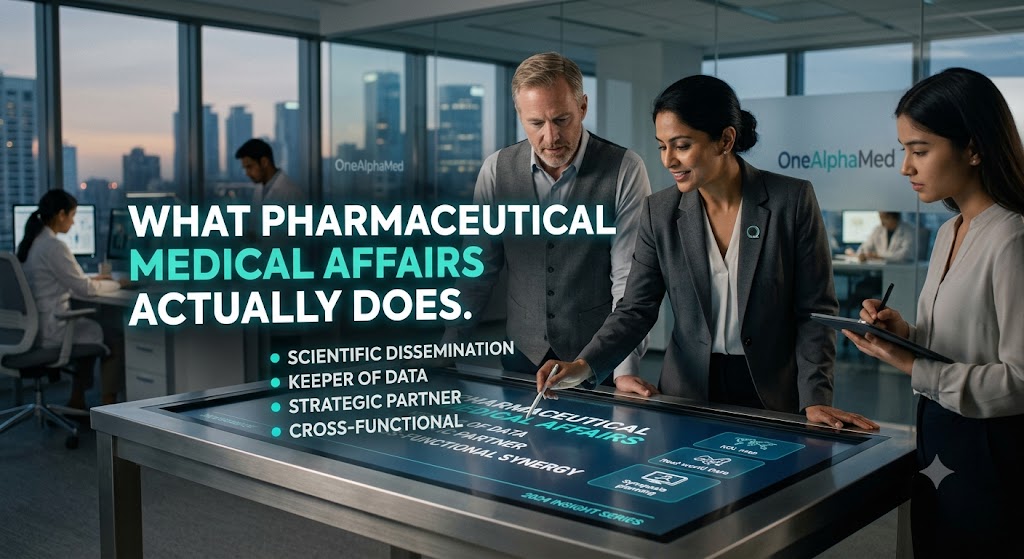
Fig 1. What Pharmaceutical Medical Affairs Actually Does
Ask ten people in a pharma organisation to describe what medical affairs does, and nine of them will describe something that sounds like scientific communication with a compliance overlay – a function that ensures promotional materials are accurate, that manages KOL relationships with appropriate documentation, and that runs CME programs and supports congress activities.
That description is not wrong. It is radically incomplete.
Pharmaceutical medical affairs, properly resourced and properly positioned, is the function responsible for building the scientific credibility of a brand across its entire lifecycle. It is what determines whether a new mechanism of action is understood by the specialist community before launch or discovered by them during a detail call three months after. It is what determines whether the real-world evidence base that payers and prescribers will eventually rely on is proactively generated or assembled reactively from post-hoc data analysis after commercial pressure has already built. It is what determines whether the key opinion leaders who shape prescribing culture in a therapeutic area are engaged as genuine scientific partners or encountered for the first time at an advisory board two weeks before launch.
The medical affairs function that is doing this work well is not a support function. It is the primary evidence architecture for the brand.
The gap between what pharmaceutical medical affairs solutions are capable of and what most companies actually invest in them to deliver is significant and it is most visible at the moment of greatest commercial consequence: launch.
Brands that arrive at regulatory approval with a complete medical affairs infrastructure – KOLs who have been engaged since Phase 3, a real-world evidence program already in design, an MSL team briefed and deployed, a publication plan that is executing rather than waiting – launch with a clinical credibility head start that compounds over the first 12 to 18 months. The brands that activate medical affairs after approval spend that same period building what their competitor built before it. By the time they catch up, the clinical narrative has been set – often not by their data, but by the void their absence left.
“According to the ZS Medical Affairs Outlook Report 2024 -a survey of 160+ medical affairs professionals across 35+ global companies - only 19% of medical affairs organisations consider themselves best in class. That means 81% of the industry recognises the gap between what medical affairs should deliver and what it currently does. The problem is not awareness of the gap. It is the structural and timing decisions that keep companies on the wrong side of it.”
The information environment that healthcare professionals navigate in 2026 is profoundly different from what it was a decade ago. Congress abstracts are available the morning they are presented. Pre-publication data sharing and open-access journals have compressed the time between trial completion and physician awareness. AI-powered literature tools mean that a specialist endocrinologist can have a working summary of the last 18 months of evidence in their therapeutic area before a Medical Representative walks through the door.
This means that an MR arriving at a specialist meeting with a message the physician has already read, processed, and formed a preliminary view on – without the benefit of OneAlphaMed’s medical affairs narrative framing that data – is not just ineffective. They are starting from behind.
Pharmaceutical medical affairs solutions address this directly. An MSL program that has been briefing the specialist community on data and evidence for 12 months before launch means that the specialist has encountered the brand’s narrative – built on evidence, delivered by a scientifically credible peer – before the commercial team arrives. The commercial message lands into a conversation already started, not a blank slate. The difference in prescriber adoption rates between these two scenarios is not marginal.
The second dimension of medical affairs’ commercial imperative in 2026 is payer evidence. In markets with formal formulary committees or institutional purchasing and this includes specialty hospital formularies, government health scheme inclusion in India, and insurance reimbursement structures across Asia, the Middle East, and Africa the conversation with payers is driven by evidence of comparative effectiveness, real-world outcomes, and cost-per-outcome value that a Phase 3 clinical trial alone does not generate.
This is evidence that only a pharmaceutical medical affairs solutions program can build. Real-world evidence studies, health outcomes research, comparative effectiveness data, and post-approval surveillance that demonstrates the brand’s value proposition in actual clinical practice these are medical affairs outputs. When they exist at the time the commercial team needs them for a formulary discussion, they are decisive. When they do not exist, the commercial team walks into a payer meeting with the same clinical trial data as every other company seeking formulary inclusion and they wait.
→The global medical affairs outsourcing market reached $1.85 billion in 2024, growing at an 11.1% CAGR and is projected to reach $2.83 billion by 2028 (Research and Markets, 2025). Pharmaceutical companies are already voting with investment. Medical affairs is no longer discretionary overhead - it is a function the industry is scaling at double-digit growth annually because the commercial case for doing so has become impossible to ignore.
The key opinion leaders in any therapeutic area are the clinical voices whose peer credibility, publication record, and scientific standing make them disproportionately influential over how new data is received and adopted. A pharmaceutical medical affairs solutions program that identifies these voices early – during Phase 3, not after approval – has the opportunity to engage them as genuine scientific partners in the evidence development process. Their insights improve trial design. Their publications shape the pre-launch evidence narrative. Their presence at launch events and advisory boards carries peer credibility that no commercial campaign can replicate.
The alternative – identifying KOLs after approval and attempting to brief them on a finished brand strategy they had no input into – is a slower, more expensive, and less credible path to the same destination. Most KOLs in a competitive therapeutic area are already engaged by the brand that started first.
Phase 3 clinical trials answer the question of whether a drug works under controlled conditions. Real-world evidence programs answer the question of whether it works in the patients who will actually receive it – in actual clinical practice, with actual comorbidities, actual adherence rates, and actual prescribing patterns. In 2026, this distinction is not academic. It is the difference between being on a formulary and not being on one.
Evidence generation as a medical affairs solution means designing the post-approval evidence architecture before approval – knowing what RWE questions will need to be answered, which data sources will answer them, what timeline makes the evidence available when it will be commercially needed, and how it will be disseminated once it exists.
Medical Science Liaisons are the field-based interface between a pharma company’s scientific evidence and the healthcare professionals who need to understand it. An effective MSL program does not deploy people with clinical qualifications to have conversations that an informed MR could have. It deploys scientific experts to have the conversations that only they can have – discussing trial methodology with an investigator, briefing a KOL on a new data presentation before congress, gathering field insights that feedback into evidence generation and brand strategy.
MSL program design – territory mapping, KOL prioritisation, interaction quality metrics, insight capture systems – is a medical affairs solutions discipline. The companies whose MSL programs generate commercial intelligence as well as clinical credibility are the ones using medical affairs solutions effectively.
Medical information is the infrastructure through which healthcare professionals ask questions about a brand’s evidence and through which a company builds or erodes clinical trust with every response. A medical information function that responds to every inquiry with a standard response document is a compliance function. A medical information function that identifies patterns in HCP inquiry – which questions are most frequently asked, which data is most requested, which clinical scenarios generate the most uncertainty – is generating intelligence that should be shaping brand strategy and clinical trial design.
The publications a brand is associated with – the journals, the authors, the data presented, the narrative framed – determine the scientific context into which every commercial message lands. A publication strategy developed as part of pharmaceutical medical affairs solutions designs this context deliberately: which data platforms need to exist and in what sequence, which publications will reach which prescriber audiences, and how the scientific narrative evolves from Phase 3 completion through post-approval evidence accumulation.
A publication strategy that is designed reactively – assembling publications from data that already exists, to address questions that are already being asked by prescribers and payers – is permanently responding to a conversation that someone else set the terms of.
The most common failure mode for pharmaceutical medical affairs in mid-size and smaller pharma companies is a structural one: medical affairs is resourced to review and approve, not to generate and lead. The team exists to ensure that what the commercial function produces is scientifically accurate and regulatory compliant – not to produce the scientific narrative that the commercial function executes against.
This is not a personnel failure. It is a mandate failure. Medical affairs teams operating under a compliance mandate cannot build the KOL relationships, evidence programs, and publication strategies that generate clinical credibility, because they were never given the authority or the budget to do so. The solution is not to hire better medical affairs professionals. It is to change what medical affairs is asked to deliver.
The second failure mode is timing. The companies that activate medical affairs solutions at or after regulatory approval are activating them when the most important work is already late. KOL relationships take 12 to 24 months to develop into the kind of scientific partnership that influences clinical practice. Real-world evidence programs take 18 to 36 months to generate the data that payer conversations require. Publication strategies need 18 months of lead time to build the pre-launch evidence narrative that clinical practice adopts as the reference standard.
The pharmaceutical companies that treat approval as the start signal for medical affairs investment arrive at launch 18 months behind where they needed to be. The ones that treat Phase 3 as the start signal arrive at approval ready.
Strong pharmaceutical medical affairs solutions in 2026 share four characteristics that distinguish them from the compliance and support function model most companies are still operating.
They are integrated with brand strategy from Phase 3 – not briefed on a finished strategy after the fact. The medical affairs lead is in the positioning workshop, not receiving the positioning output. The evidence strategy is aligned with the commercial strategy before either is finalised.
They generate intelligence as well as credibility. MSL interactions feed into evidence generation planning. Medical information inquiry patterns feed into publication strategy. KOL advisory boards generate insights that change brand positioning, not just validate it.
They are measured against commercial outcomes, not just activity metrics. Not how many KOL interactions occurred, but what clinical behaviour those interactions influenced. Not how many medical information requests were fulfilled, but what the inquiry pattern says about unmet clinical need.
And they are supported by a medical affairs solutions partner – whether internal or external – with the scientific expertise, the KOL networks, the regulatory literacy, and the strategic communications capability to execute across all five solution pillars simultaneously.
The pharmaceutical brands that arrive at 2026’s evidence-hungry, payer-scrutinised, HCP-sophisticated commercial environment with that infrastructure in place are not hoping their data will be compelling enough. They already know it is because they built the clinical credibility architecture that made it compelling long before anyone was asking. Explore – The Role of Medical Affairs in Modern Healthcare and Pharmaceuticals
A: Pharmaceutical medical affairs is the function responsible for building and communicating the scientific evidence base for a pharma company's products across their full lifecycle from late-stage development through post-approval. It encompasses KOL identification and engagement, evidence generation and real-world evidence programs, Medical Science Liaison (MSL) field programs, medical information services, and publication and scientific communication strategy. When properly resourced and positioned, pharmaceutical medical affairs is not a support function - it is the primary evidence architecture that determines whether a brand earns clinical credibility with prescribers and payers.
A: Medical affairs solutions typically include five interconnected capabilities: KOL identification and relationship strategy, evidence generation and real-world evidence program design, MSL program design and field effectiveness management, medical information and HCP scientific exchange infrastructure, and publication strategy and scientific communication. Each of these directly affects commercial outcomes through prescriber trust, payer evidence, and clinical narrative control - when built into commercial planning during Phase 3 rather than activated after regulatory approval.
A: Launch success is determined in large part by decisions made 18 to 36 months before approval. The KOL relationships that carry credibility at launch take 12 to 24 months to build. The real-world evidence that payers require takes 18 to 36 months to generate. The publication narrative that prescribers adopt as the scientific reference standard for a therapeutic area takes 18 months of deliberate planning to establish. Pharmaceutical medical affairs solutions that begin during Phase 3 build all of this before the commercial team arrives. Medical affairs that starts at approval spends the first 12 to 18 months of a brand's commercial life catching up.
A: Pharmaceutical marketing drives commercial adoption - brand positioning, HCP campaign strategy, channel planning, field force enablement. Medical affairs builds the scientific credibility that makes commercial adoption credible - through evidence, clinical relationships, peer-validated publications, and real-world outcomes data. The two are not competing functions. The strongest pharma brands integrate both from Phase 3 - using medical affairs to build the evidence architecture and KOL network that commercial strategy then leverages. The brands that separate them with commercial strategy leading and medical affairs executing, consistently underperform at launch against competitors who built the integration earlier.
A: Look for four things. First, scientific depth - the partner should have qualified medical affairs professionals with clinical or life sciences backgrounds, not generalists who have added medical affairs to their service list. Second, strategic capability - they should be able to design the evidence strategy, not just execute programs within one. Third, KOL network - genuine relationships with therapeutic area KOLs, not a database. Fourth, regulatory literacy - deep familiarity with OPPI, DCGI, NMC guidelines, and equivalent international frameworks, built into delivery rather than reviewed at the end.
+91 9811660635
info@onealphamed.com
2414, Ground Floor, Aravali Vihar, Sector 49 Faridabad, Haryana – 121001 India
Copyright © 2026 OneAlphaMed. All Rights Reserved.