
A working guide to readability standards, multimodal communication, and the India-specific health literacy realities that determine whether awareness produces behaviour change.
Executive Summary (TL;DR)
The Comprehension Gap: Most Indian pharma patient education sits at 11th-grade reading level; the average urban patient reads at 5th-grade level. The gap is why awareness campaigns generate impressions but no behaviour change.
The Literacy Mechanism: Health literacy initiatives that work combine readability discipline, visual-first communication, multimodal channel design, and regional language adaptation — not translation alone.
The Competitive Imperative: Brands that build literacy-grounded patient communication out-recruit, out-retain, and out-comply competitors running campaigns optimised for educated metropolitan patients alone.
Pharma & Life Sciences Practice • Brand Strategy Intelligence
Updated: May 05, 2026
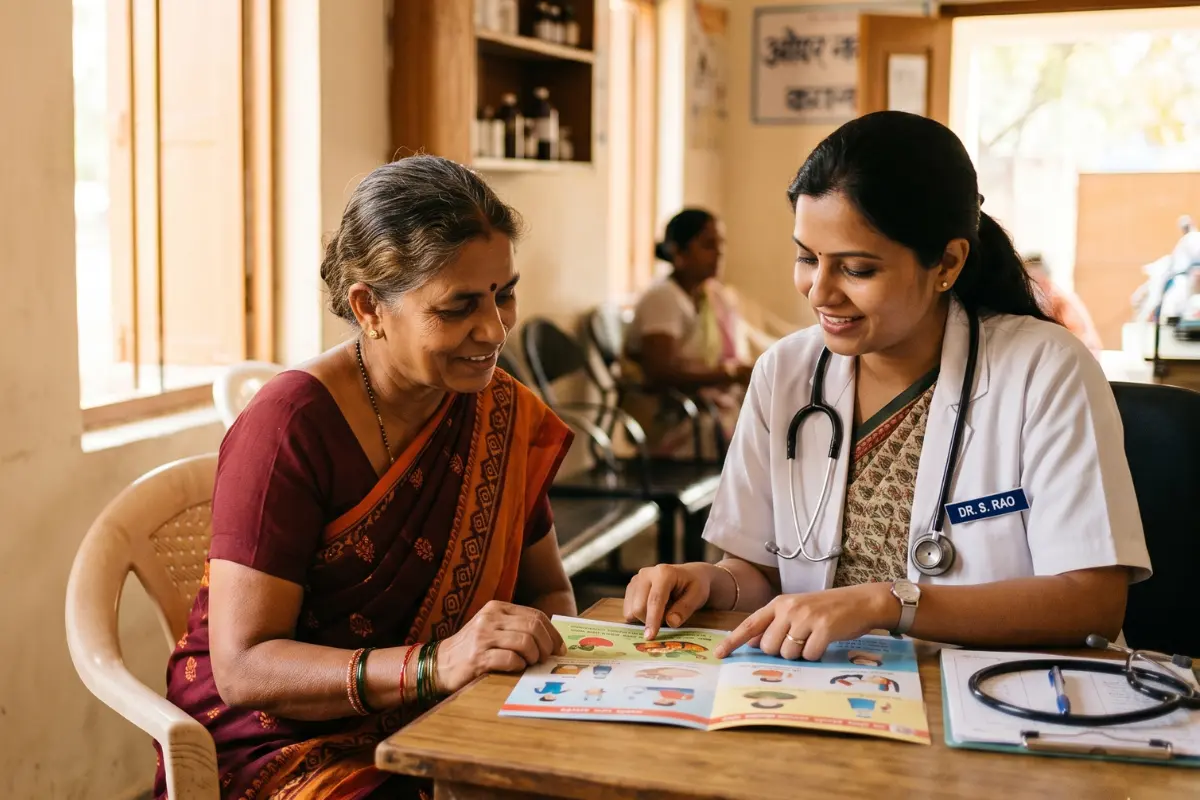
Fig 1. Health literacy gaps quietly determine whether disease awareness produces behaviour change.
Pharma disease awareness campaigns in India routinely show strong reach numbers and weak behaviour change. The reach part is easy — Indian digital platforms deliver patient impressions efficiently. The behaviour change part — patients actually presenting at clinics and persisting with therapy — is where awareness campaigns repeatedly underperform. The reason is not channel mix or creative quality; it is health literacy, or rather the absence of it. The educational content reaching patients is consistently written at a reading level they cannot fully comprehend, and this gap quietly cancels the awareness investment.
What is consistently missed is that India is not one health literacy market. Urban metropolitan patients with English-medium education process medical content differently from semi-urban patients with regional schooling. Brands that design communication for the urban metropolitan segment alone leave the majority of the addressable patient population without meaningful comprehension. The work this piece outlines is what India-grade health literacy initiatives actually look like in practice.
The mechanism that breaks low-literacy disease awareness is straightforward: comprehension is a prerequisite for behavioural intent. A patient who reads but does not fully understand a message produces no change in healthcare-seeking behaviour, regardless of reach frequency.
India’s health literacy landscape is not a single average. Marketing teams that plan against national averages routinely miss the segments that drive market volume.
While urban literacy in India has reached approximately 90%, functional health literacy remains significantly lower. Surveys indicate that even in urban segments, nearly 40% of patients struggle to accurately interpret standard discharge instructions or medication labels.
"73% of urban Indian patients cannot accurately read and act on standard discharge instructions. Most pharma patient education sits at 11th-grade reading level — the comprehension gap quietly cancels the awareness investment."
Readability is not a creative judgment; it is a measurable characteristic that pharma teams can specify, test, and audit. Strong patient education in India typically sits at a 6th-to-8th-grade equivalent, yet most clinical content defaults to an 11th-grade level, immediately alienating the audience.
Text alone is increasingly insufficient for modern patient segments. Visual communication is what closes the comprehension gap, and multimodal design is what extends that comprehension into actual clinical action.
The metrics that prove a literacy-adapted programme is working differ from default campaign reports. To move beyond reach, pharma dashboards must capture how well the audience actually internalises the message.
Health literacy initiatives are the unglamorous infrastructure that decides whether disease awareness campaigns produce patients in clinics or just impressions in dashboards. Brands that build literacy discipline systematically outperform those optimising for reach metrics — especially in therapy areas where patient persistence drives lifetime value.
Over the 2026–2028 cycle, the leaders will be the brands extending awareness into patient outcomes across the entire Indian population, not just metropolitan segments. Addressable patient growth over the next decade will come from segments where literacy-adapted communication is the entry condition, not an optimisation.
OneAlphaMed builds patient communication programmes grounded in literacy adaptation, multimodal design, and India’s regional reality. Explore our patient advocacy and engagement services →
Health literacy initiatives are programmes that adapt patient-facing communication so that the target patient population can actually comprehend and act on it. The work spans readability adaptation, visual-first design, regional language register, and multimodal delivery. Strong literacy initiatives measure comprehension and action rather than reach, recognising that exposure without understanding produces no behaviour change.
Strong patient education in India typically targets 6th-to-8th-grade reading level in the chosen language. Most pharma patient materials default to 11th-grade-or-higher level, which exceeds the functional literacy of a majority of even urban patients. Readability metrics like Flesch-Kincaid for English and equivalent indices for Indian languages allow brand teams to specify and verify the target objectively.
Translation addresses language but not medical-context register, and routinely produces materials that read fluently but communicate poorly. Real adaptation simplifies the medical register, restructures sentences for low-literacy comprehension, and validates with reading-level tools. The strongest programmes also adapt visual elements, cultural cues, and channel mix — not just text.
Reach metrics significantly underrepresent health literacy programme impact. Comprehension testing through short post-exposure surveys is the leading indicator. Action-conversion metrics — diagnostic-presentation rates in footprint versus matched non-footprint regions — provide the lagging indicator. Comprehension gap analysis across campaign cycles drives iterative improvement and produces compounding behavioural change.
+91 9811660635
info@onealphamed.com
2414, Ground Floor, Aravali Vihar, Sector 49 Faridabad, Haryana – 121001 India
Copyright © 2026 OneAlphaMed. All Rights Reserved.