How Digital Opinion Leaders complement, not replace, classical KOL networks — and the operating model that lets pharma deploy both at compliant scale.
Executive Summary (TL;DR)
The Influence Shift: 70%+ of clinicians under 40 cite peer social posts as a primary source of clinical updates — yet less than 12% of Indian pharma marketing budgets flow to medical influencer marketing.
The Operating Model: DOLs are not 'KOLs on social.' They require separate identification methodology, real-time content review, peer-engagement KPIs, and compliance disclosure operating in 24-hour cycles rather than 30-day ones.
The Competitive Imperative: Brands that build DOL infrastructure now own the conversational territory where younger prescribers form clinical opinions; brands that wait will rebuild this capability under harder compliance conditions.
Pharma & Life Sciences Practice • Brand Strategy Intelligence
Updated: May 08, 2026
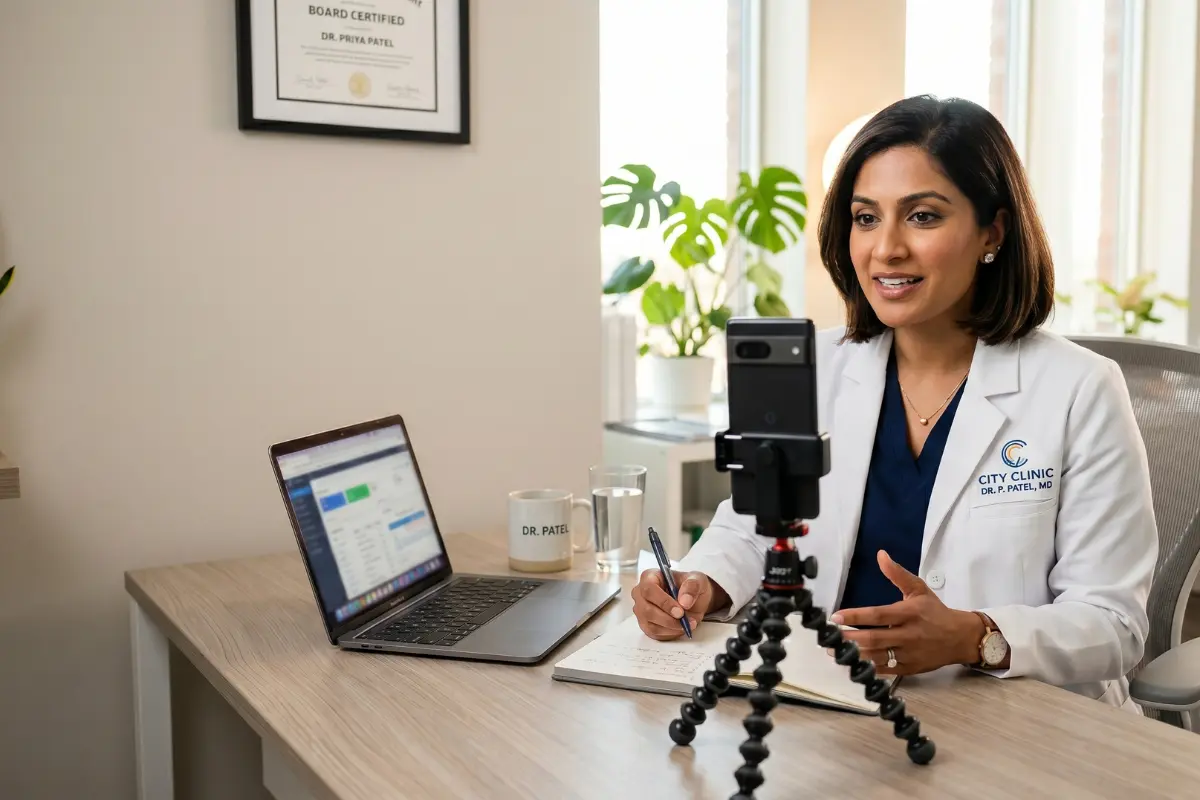
Fig 1. Authority anchored in scientific rigour now defines pharma brand credibility.
Medical influencer marketing has stopped being a fringe channel for Indian pharma in 2026 — but most budgets have not caught up to the audience reality. A senior physician planning a prescribing decision today increasingly checks LinkedIn and X for peer commentary before opening a journal. A younger prescriber rarely opens the journal at all. The clinicians shaping these conversations — Digital Opinion Leaders (DOLs) — are now the most efficient HCP-trust channel pharma has.
What is consistently misunderstood is the operational model. DOLs are not KOLs with Twitter accounts. The identification methodology, content review cadence, compliance frame, and KPIs are all different. Treating a DOL programme as an extension of the KOL panel is the most common reason pharma brands produce activity without influence. This guide explores the operating distinction and the launch model that generates real HCP-trust outcomes.
A Key Opinion Leader (KOL) derives authority from institutional standing: academic affiliations, PI history, and peer-reviewed publications. Their influence operates through formal channels with multi-month cycles. In contrast, a Digital Opinion Leader (DOL) builds authority through digital fluency and networked peer engagement—translating clinical literature into accessible threads and video that other HCPs measurably engage with.
The defining metric of a DOL is not follower count; it is peer-to-peer engagement intensity within specific therapeutic networks. A clinician with 4,000 peer-engaged followers in a tight therapy area routinely outperforms a generalist with 80,000 followers. Furthermore, the operating velocity differs by an order of magnitude: while a KOL prepares for a quarterly congress, a DOL responds to overnight clinical news within 24 hours.
Several measurable forces are compounding simultaneously to make medical influencer marketing strategically urgent:
"70%+ of clinicians under age 40 cite peer social posts as a primary source of clinical updates. Yet less than 12% of Indian pharma marketing budgets are allocated to medical influencer marketing — the strategic mismatch is widening."
Most pharma brands mistake DOL identification for influencer-marketing-with-credentials. This results in high-follower clinicians whose actual peer influence is thin. Genuine DOL identification follows a specialized methodology focused on network impact.
Identification should anchor on peer-engagement signals rather than reach. Key inputs include peer-mentions per post, peer-share rates, and comment depth from verified HCP accounts. These indicators reveal whether other clinicians actually engage with the DOL’s clinical thinking—the only metric that predicts prescribing-conversation influence.
DOL engagement carries a distinct compliance burden. Under the 2024 framework, the operating model must reflect transparency and speed without compromising regulatory safety.
Lastly, contract structure is vital. Fair-market-value documentation and content-independence clauses must be robust. If a brand dictates specific claims, the post loses its protective frame and is reclassified as branded promotion during a regulatory audit.
Explore how OneAlphaMed integrates DOL strategy into broader Pharma brand strategy and product launch planning across the product lifecycle.
The metric that matters in medical influencer marketing is not what most pharma dashboards report. Reach and impression numbers are easy to capture but uninformative. To understand if a programme is shaping prescribing conversations, three deeper indicators are required.
Medical influencer marketing through Digital Opinion Leaders is no longer optional for brands aiming to influence clinicians under 50 — it is the channel where their information habits are most active. The brands building compliant, evidence-anchored DOL programmes in 2026 are establishing audience relationships their competitors will spend years trying to replicate.
The next eighteen months will separate pharma brands that built DOL infrastructure during the 2024–2025 compliance-clarification period from those that kept treating digital influence as adjacent to the KOL panel. The latter group will be playing catch-up through 2028; the former will own the conversational territory where prescribing decisions are increasingly made.
OneAlphaMed designs medical influencer marketing programmes that integrate KOL and DOL strategy under unified compliance and measurement frameworks. Explore our brand strategy and product launch services →
Medical influencer marketing engages credentialed clinicians — Digital Opinion Leaders or DOLs — who build measurable peer trust on digital platforms. The work amplifies clinician-authored content within professional HCP communities. Unlike consumer influencer marketing, the audience and content focus on clinical evidence and peer engagement, and compliance disclosure operates under pharma frameworks like UCPMP 2024.
KOLs derive authority from institutional credentials and operate through formal channels — peer-reviewed publications, congress podiums, advisory boards. DOLs derive authority from digital fluency and networked peer engagement on platforms. The two layers are complementary: KOLs provide scientific credibility, DOLs provide distribution velocity and peer trust within real-time clinical conversations. Most strong programmes deploy both in parallel.
Yes, medical influencer marketing remains compliant under UCPMP 2024 when financial relationships are transparently disclosed in each post, fair-market-value documentation supports any payment, and content editorial direction rests with the clinician. Brands that try to direct specific claims into DOL content risk having posts reclassified as branded promotion. Automated archiving of every sponsored post is now operating standard.
Reach metrics significantly underrepresent DOL programme impact. Stronger metrics include share-of-voice in clinical conversations, sentiment shift in HCP communities, prescription pattern differences in exposed versus matched non-exposed HCP cohorts, and peer-engagement intensity rather than raw follower counts. These metrics move over 8–16 week windows and correlate more reliably with prescription movement than any reach number.
+91 9811660635
info@onealphamed.com
2414, Ground Floor, Aravali Vihar, Sector 49 Faridabad, Haryana – 121001 India
Copyright © 2026 OneAlphaMed. All Rights Reserved.